My dad recently sent me a Hallmark birthday card that allows for a special message to be played when opened. What’s interesting about it is that a personalized message can be recorded multiple times (“after the beep!”) and the motorized gear assembly moves the mouth in sync with the audio.
After receiving his recorded message (it was at least 20 seconds), I decided to sacrifice the card to the DIY spirit. There are lots of applications for this circuit and I’ve only scratched the surface by using it as a beat recorder with motor control.
The following pictures are just some shots of the card and the circuit contained within:
[caption id=“attachment_568” align=“aligncenter” width=“650”] After opening the envelope, this bulky card has some surprises in store for the lucky recipient![/caption] [caption id=“attachment_582” align=“aligncenter” width=“650”]
 Behold! Once the card is open, a slider tab is pulled and the card is activated. Whatever message that was recorded play![/caption] [caption id=“attachment_569” align=“aligncenter” width=“325”]
 The horse’s mouth opens and closes along with the recorded audio. It is attached to a motor gear assembly.[/caption] [caption id=“attachment_570” align=“aligncenter” width=“325”]
 The horse’s mouth opens and closes along with the recorded audio. It is attached to a motor gear assembly.[/caption] [caption id=“attachment_583” align=“aligncenter” width=“650”]
 The back of the card, for any of you who are interested.[/caption] [caption id=“attachment_584” align=“aligncenter” width=“650”]
 The back of the card, for any of you who are interested. Look up some UPCs or product codes![/caption] [caption id=“attachment_571” align=“aligncenter” width=“650”]
 This card costs $6.99. Not bad for a device you can use over and over again![/caption] [caption id=“attachment_573” align=“aligncenter” width=“712”]
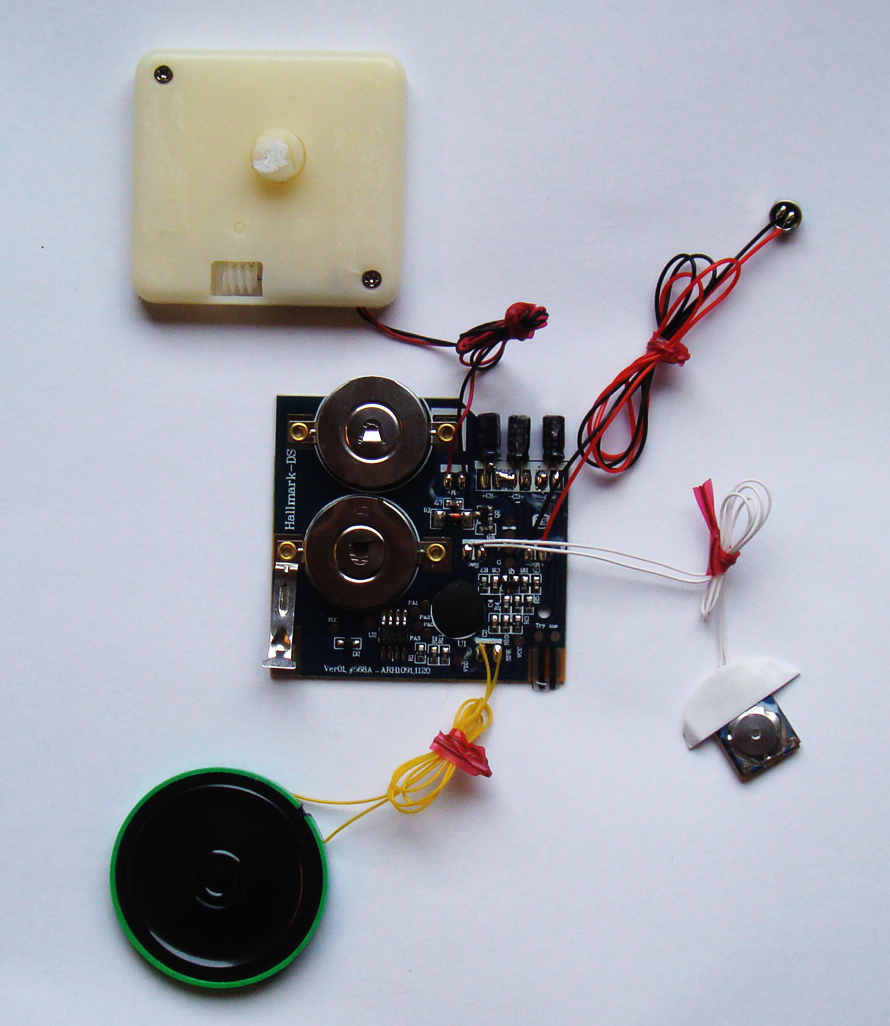 Once the circuit assembly has been CAREFULLY removed from the card, this is what you’re left with. There’s an electret microphone for recording, a small toy speaker, a wired switch, and the motor-gear assembly. The PCB is also interesting…[/caption] [caption id=“attachment_574” align=“aligncenter” width=“650”]
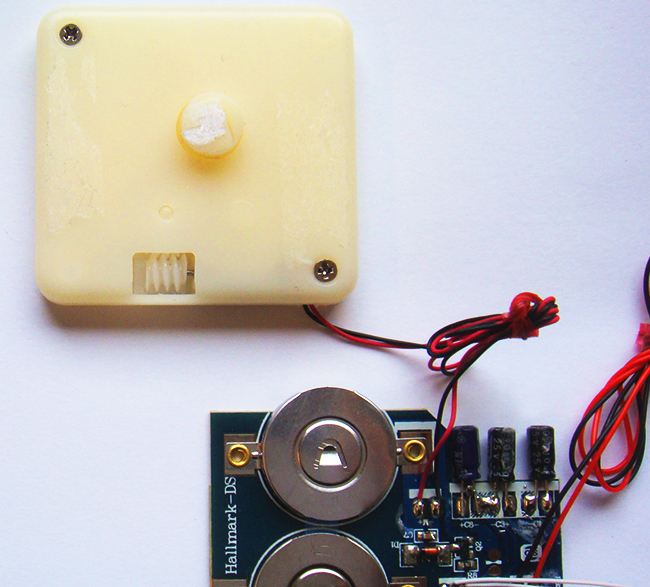 The motor is very similar to a cell phone vibration motor. You can find one at Radioshack for about $4. The piece in the middle is what actually moves.[/caption] [caption id=“attachment_585” align=“aligncenter” width=“650”]
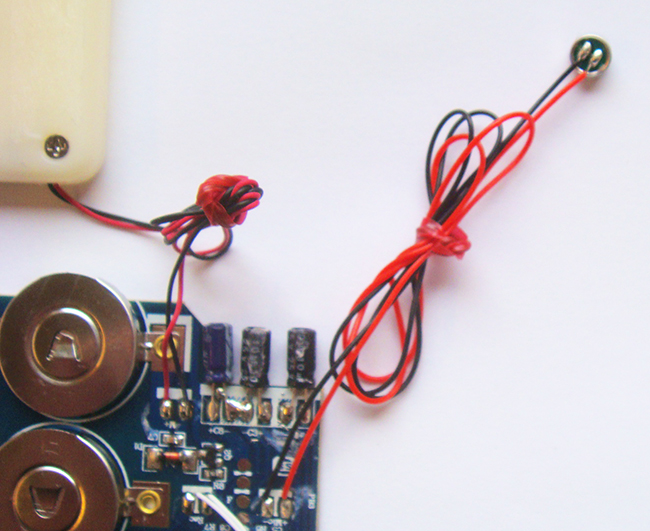 The connection for the electret microphone on the PCB. The wire is quite long.[/caption] [caption id=“attachment_575” align=“aligncenter” width=“325”]
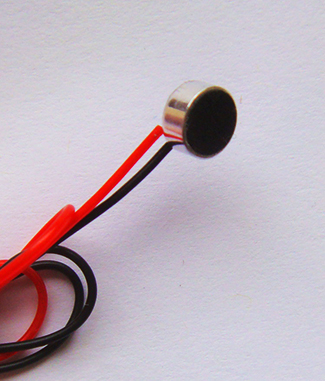 A close-up shot of the electret microphone. You can find these almost anywhere.[/caption] [caption id=“attachment_577” align=“aligncenter” width=“650”]
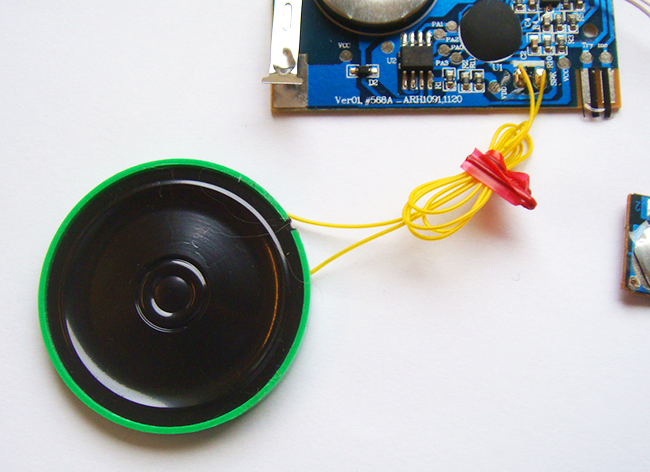 The simple speaker. Nothing too fancy here. I definitely want to remove it and make it a line-level output device.[/caption] [caption id=“attachment_576” align=“aligncenter” width=“650”]
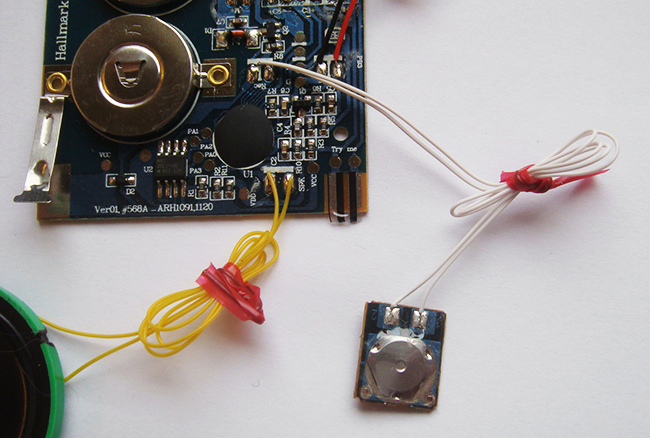 I really like the switch Hallmark used.[/caption] [caption id=“attachment_572” align=“aligncenter” width=“650”]
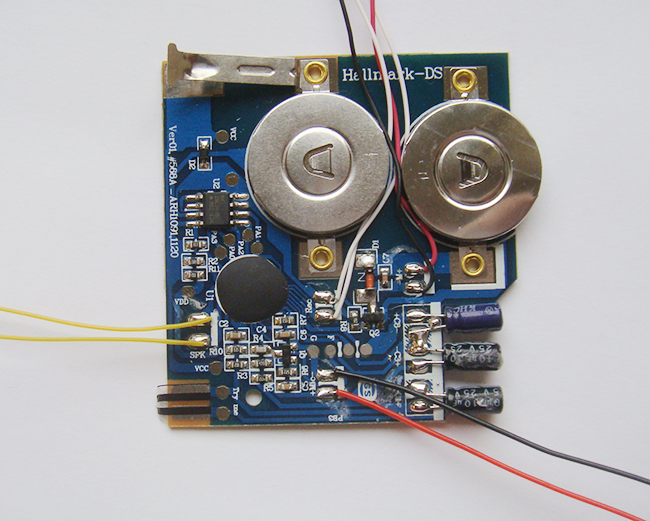 Here’s a quick shot of the PCB without any of the off-board components getting in the way. In the top left corner is a simple metal switch that needs to be ON before you can record. Just to let ya know…[/caption] [caption id=“attachment_578” align=“aligncenter” width=“650”]
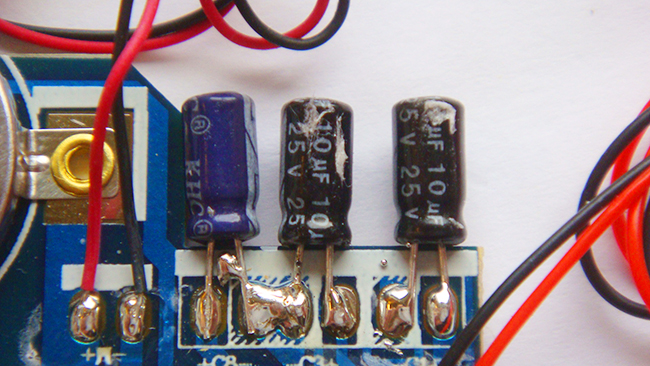 The electrolytic capacitors. Note the shoddy soldering job. Even the pros have bad days![/caption] [caption id=“attachment_581” align=“aligncenter” width=“650”]
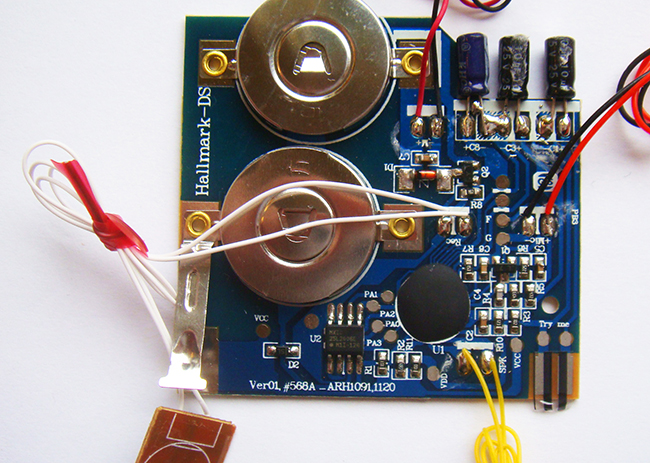 Another nice shot of the PCB.[/caption] [caption id=“attachment_579” align=“aligncenter” width=“650”]
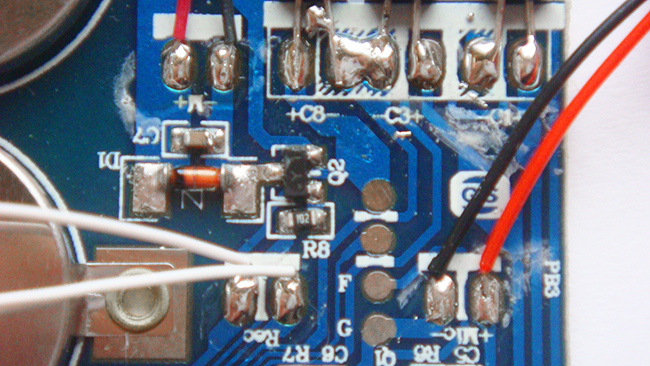 Up close shot of the PCB. I believe those exposed circles are test points to Quality Control the PCBs. That might be a good place to start circuit bending.[/caption] [caption id=“attachment_580” align=“aligncenter” width=“650”]
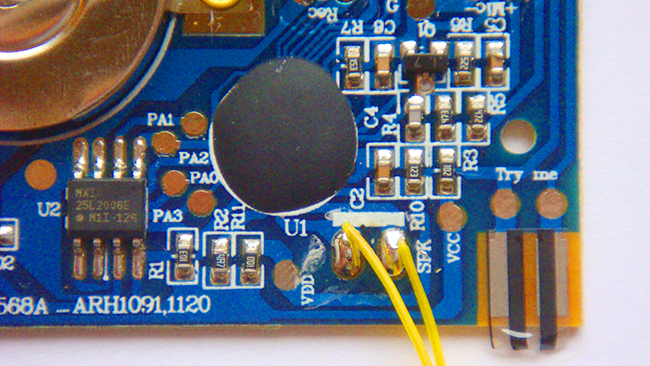 The infamous obscuring glob of plastic that keeps out all but the most dedicated Reverse Engineers. We’ll most likely never figure out what’s behind it, but we only need to know how it works and reacts .[/caption] [caption id=“attachment_586” align=“aligncenter” width=“650”]
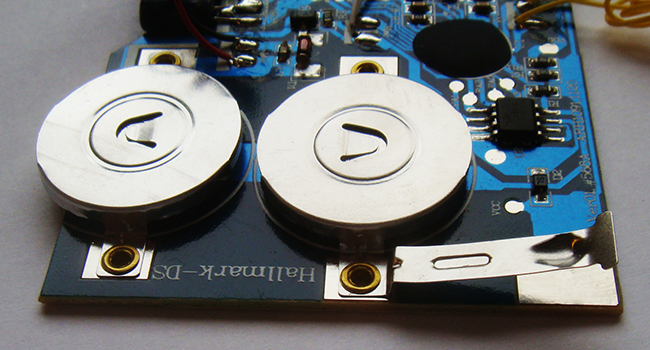 The batteries. They’ve been going strong ever since I started messing with the card’s circuit. I’m going to guess that this circuit runs off of 3.0-3.3V.[/caption]